
What a QR code real estate sign should link to
A QR code on a sign is just a shortcut to a web page. Someone walking past points their iPhone camera at it and taps the link that appears, as Apple describes in its guide to scanning a QR code with an iPhone. In Setrik QR, that's a QR code for a website: paste the link, and the app checks that the code scans before you print it. The tap-by-tap steps are in the help article on making a QR code for your website.
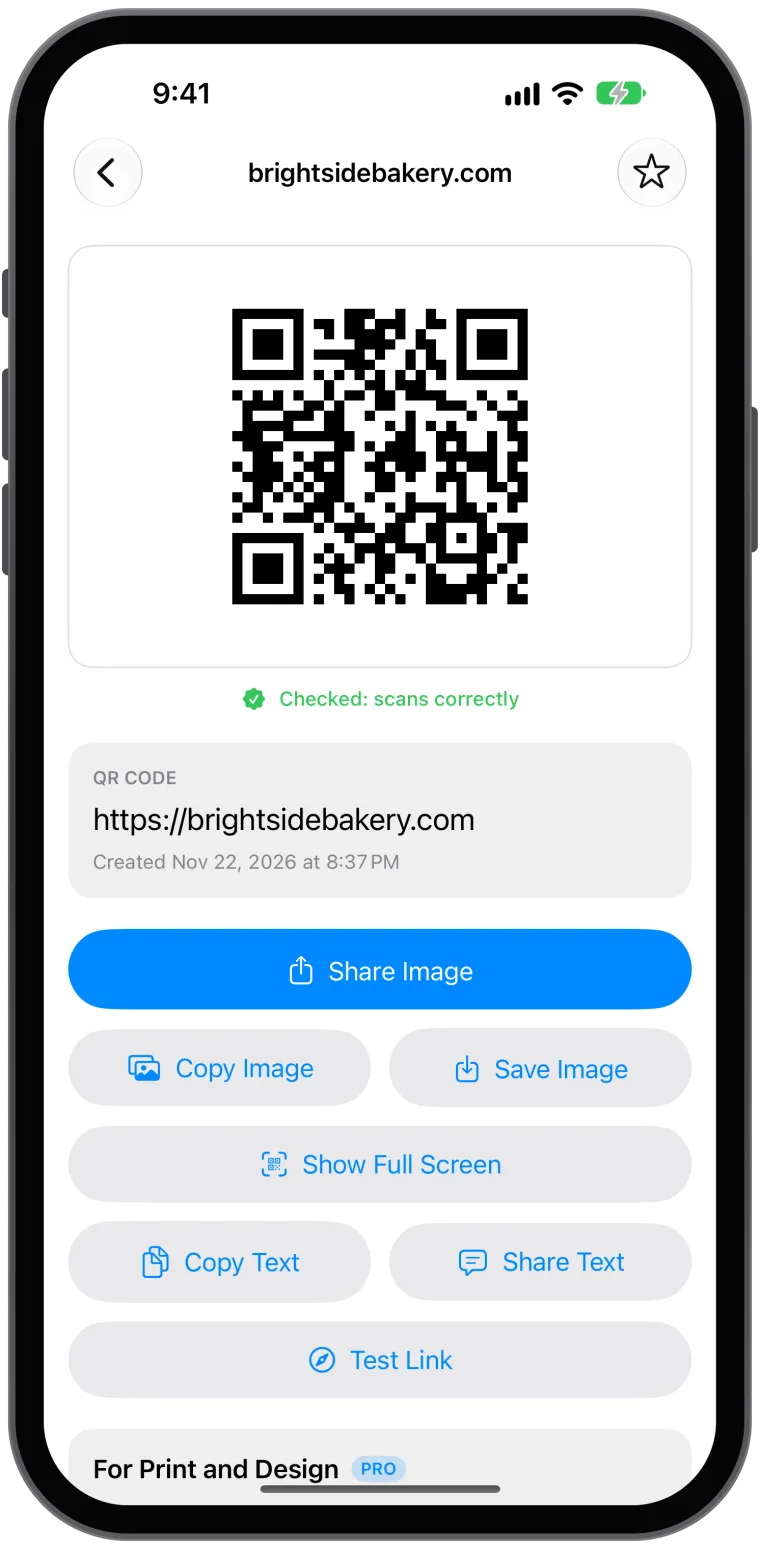
The harder question is which page. A plain QR code, sometimes called a static code, holds the address itself, which is why it never expires. It also means a printed code can't be pointed somewhere new later. If the code opens a listing page on a site you don't control, that page may vanish once the home sells, and every sign and flyer still out there leads to an error. So choose an address that will still make sense next month and next year.
Good places for the code to point
A page for the property on your own site
You control it, so after the sale it can become a "sold" page that links to your other homes.
Your current listings page
One code on a reusable sign rider can point here for every home, since the page changes and the address doesn't.
A simple page for a home you're selling yourself
Photos, price, details and how to reach you, on a page you can update or take down.
How big to print a code on a yard sign
Size is where most QR code real estate signs go wrong. A common rule of thumb says a code should be about one tenth as wide as the distance it's scanned from. It's a guide, not a standard, but it's a good starting point. If people will scan from the sidewalk about 10 feet away, that points to a code around 12 inches wide. If the sign sits right by the walkway and people step up to it, 6 to 8 inches can work. Nobody should scan while driving, so size it for someone standing still.
Four simple tips for signs that scan
Size it for the distance
Measure where people will actually stand, then use the one-tenth rule as your starting point.
Leave a blank margin
Keep a clear white border around the code on every side; scanners call it the quiet zone and need it to find the code.
Keep it dark on light
A dark code on a white or pale panel scans best, so avoid light codes on dark sign colors.
Choose weatherproof, matte material
Rain, fading and glare all make codes harder to read, so ask your sign printer for an outdoor, low-shine finish.
Before the sign goes up, print a test at full size and scan it from where people will stand, with two or three different phones. Try it in bright sun and late in the afternoon, when shadows fall across the yard. Sign printers usually want a sharp file, and with Setrik QR Pro you can send them a print-quality PDF or SVG that stays crisp at any size, or a large PNG. The help article on checking that a code scans walks through the test.
Sharp at any size
Print-quality PDF and SVG files for print shops and design apps, plus large PNGs.
QR code real estate flyers and open houses
Flyers are read up close, so the code can be much smaller, about 1 to 1.5 inches wide. Give it a short line of text, like "Scan for photos and details," so people know what it does. A caption under the code is free in Setrik QR. Print the web address under it as well, for anyone who'd rather type it. A code on a flyer is also handy for a virtual tour link or a page with the full photo set.
For an open house, a code at the door can open a sign-in form on the visitor's own phone, so nobody shares a pen. Google's help page on sharing a Google Form with responders shows where to copy the responder link, with an option to shorten it. A shorter link makes a simpler code that's easier to scan. Make the code from that link, print it on a stand-up card, and try it yourself before the first visitor arrives.
Your own card, in one scan
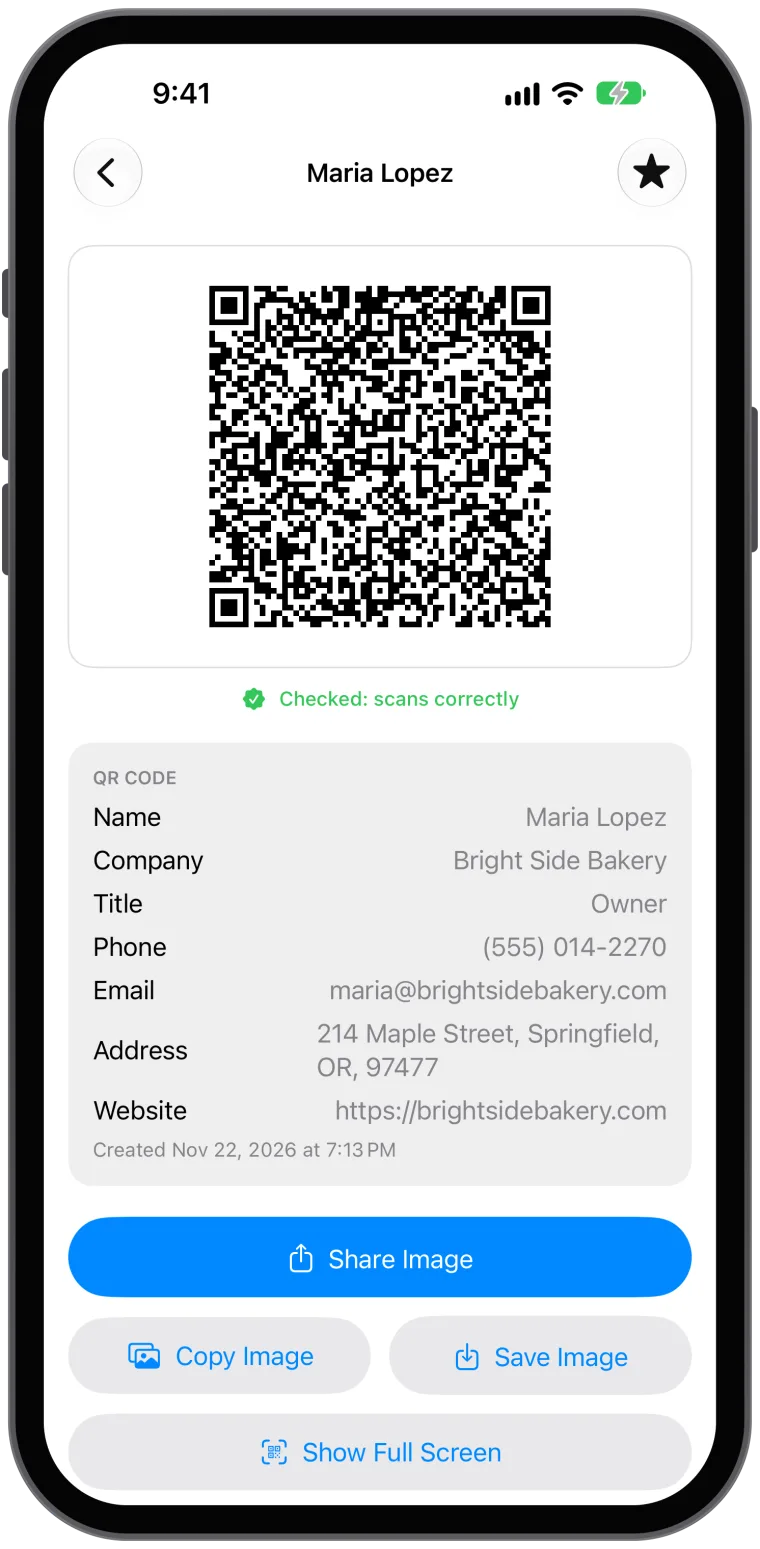
Agents can use a second kind of code, too. A contact card QR code holds your name, company, phone, email, website and office address. When a buyer scans it with their iPhone camera, they can add you to their contacts in one tap, with no typing and no misspelled email. Imagine Maria Lopez puts one on the back of her business card and another on her sign rider. Each person who scans it has her number saved before they walk away.
One honest note: Setrik QR makes plain codes that never expire, and it doesn't count scans. Some services offer scan counts by sending each scan through their own servers first, which means the code only works while that service does. If you just want a QR code real estate sign that opens the right page for years, a plain code does the job with nothing to renew. The help article on putting your business card in a QR code covers the contact card steps.
The bottom line
Is a QR code real estate sign worth adding?
For most agents and for-sale-by-owner sellers, yes, when it's done the plain way. A QR code real estate sign is only as good as the page behind it and the size it's printed at. Point it at a page you control, size it for where people stand, keep it dark on light, and test it outdoors before it goes up. Add a small code to flyers and a contact card code to your own card, and every piece you hand out leads somewhere useful.
QR codes that never expire
Make it on your iPhone in seconds, check that it scans, and put it on your flyer, card or sign. No ads, no subscription.
See how it works